
THE ESSENTIAL COMPONENTS FOR DEMAND GENERATION
Over the years, I’ve had the privilege of conducting Demand Generation Workshops for hundreds of marketers. These workshops are designed to be a “lab”, a…

Over the years, I’ve had the privilege of conducting Demand Generation Workshops for hundreds of marketers. These workshops are designed to be a “lab”, a place where marketers could learn about how to build an effective demand generation program, and then spend time applying what they learned to their respective companies.
After the workshops, I often receive feedback such as, “I knew we needed a demand gen strategy; we just didn’t know where to start…now we know”. I hear this type of sentiment often, which is why I’m re-posting this blog.
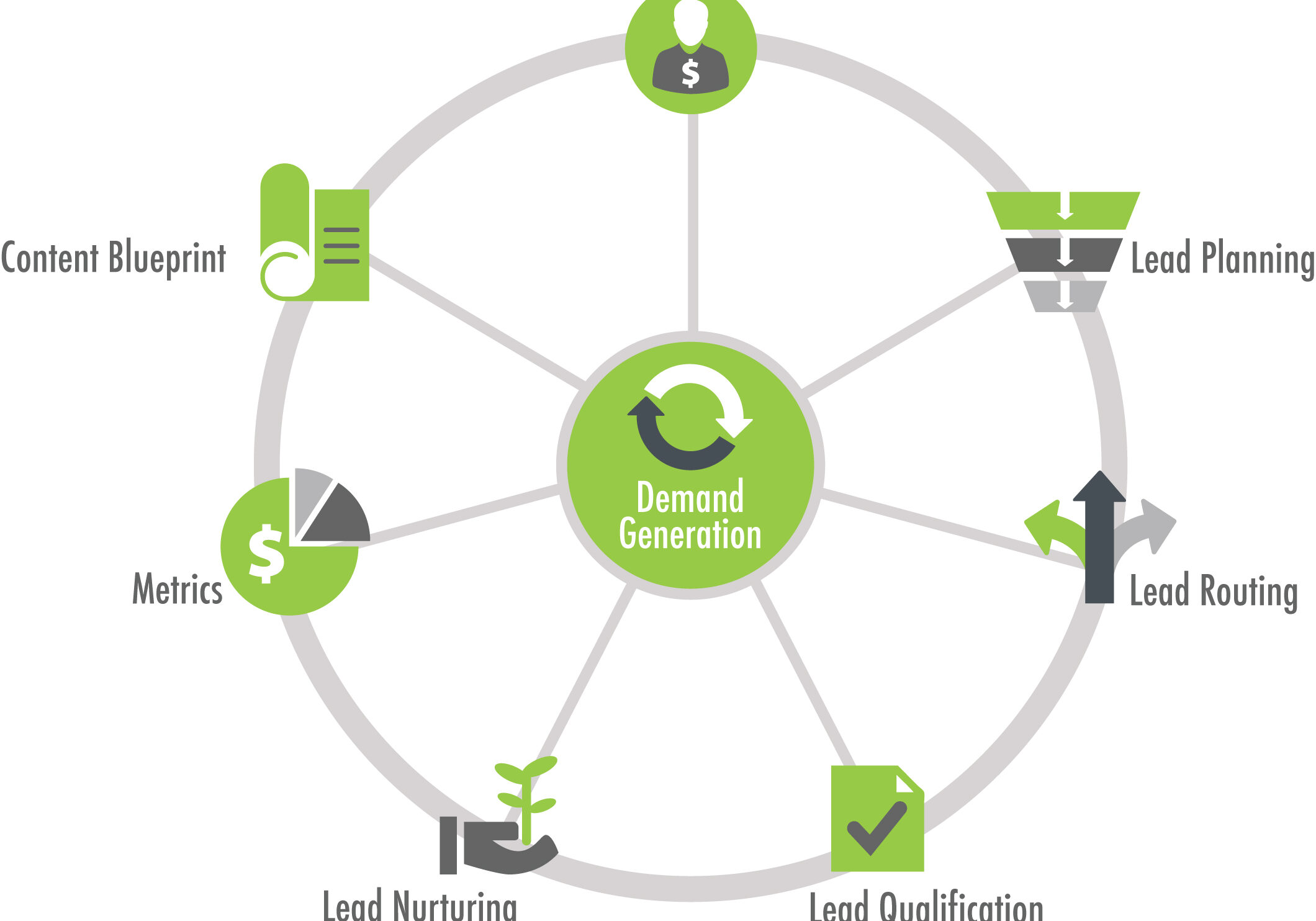
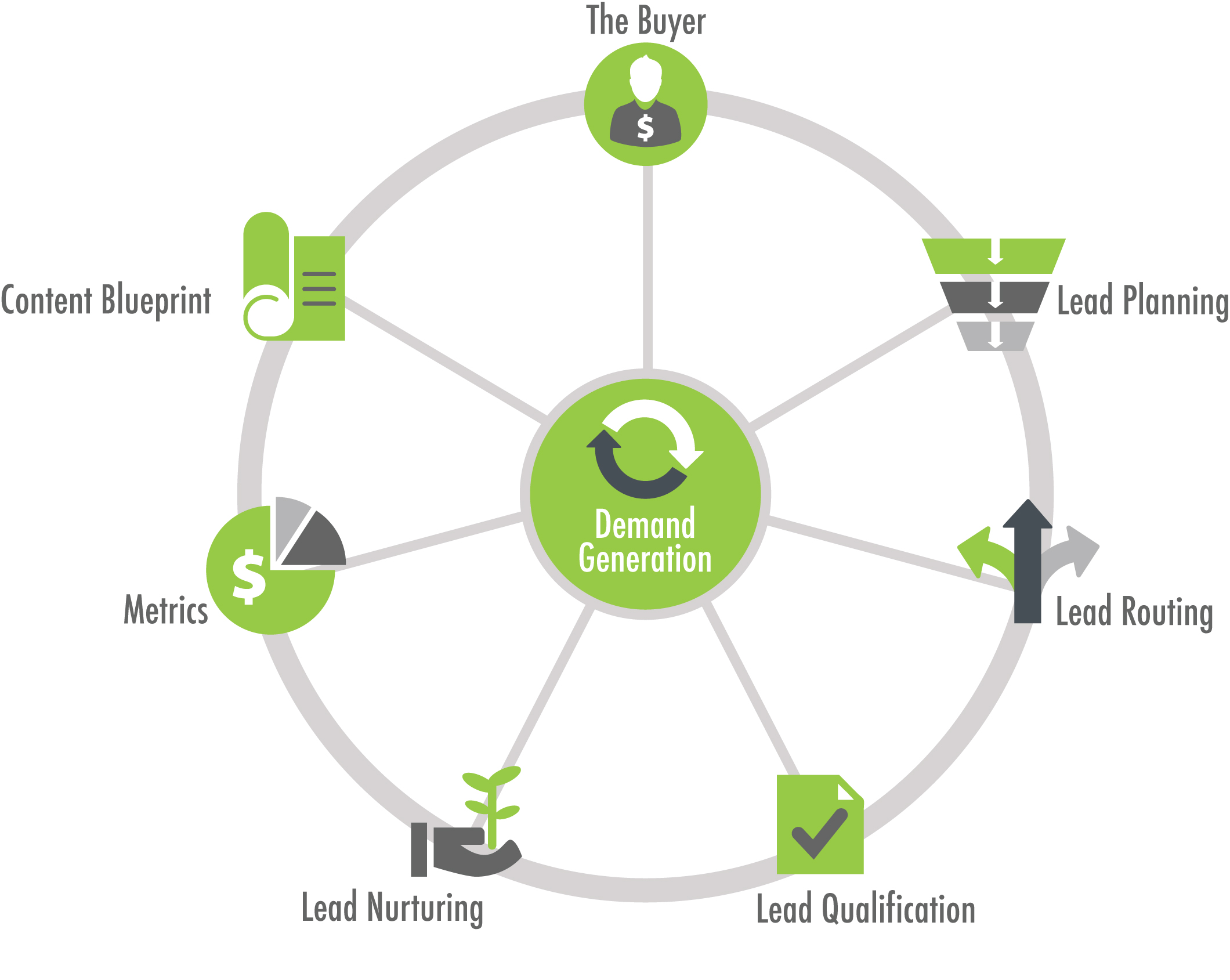
The illustration below lays out the essential elements of an effective demand generation process. It’s shaped like a wheel with spokes, because much like a wheel, when one of the spokes is broken, the entire wheel suffers. So, it is with demand generation. If one of these elements is lacking, the entire process will suffer. Following the diagram is a description of each of the elements…
- The Buyer
It all starts with understanding your buyer. This might sound obvious, but I’m amazed at how few companies work with defined buyer types or personas. A persona is a biographical sketch of the target buyer(s) and it includes categories such as background, challenges, daily activities, motivations and buying roles. In addition, it’s important to try to understand what the buyer is thinking. This is often referred to as the “Buying Process” or the “Buyer’s Journey”. It’s the decision-making process that the buyer goes through when making a purchase. The buyer often goes through “phases” (for example, “Status Quo”, “Problem Awareness”, “Information Gathering”, etc.) as they look to buy a solution to solve their problem. - Lead Planning
The effectiveness of a demand generation program can only be determined if goals are established ahead of time. The Lead Planning component establishes targets such as revenue, conversion rates and “top of funnel” goals. Both inbound and outbound lead generation strategies are created based on these goals. - Lead Routing
This is the operational component of demand generation. When a “lead” is obtained, there must be a defined process to determine how and where it should be routed, what system qualifies it, if it should be nurtured or sent directly to sales, if sales needs it to be further nurtured, if it needs to be converted to an opportunity, etc. This process, once defined, should be configured into the marketing automation and CRM systems. - Lead Qualification
Throughout the marketing-sales cycle, leads need to be qualified to determine to what stage or channel they should be sent. (The idea that all leads should be sent to sales is a foolish one). To achieve this, a qualification model should be established. A sound qualification model includes label definitions, criteria, and sometimes lead scoring and lead grading. - Lead Nurturing
Too many think that Lead Nurturing is a synonym for “drip campaign”. Lead Nurturing is more than that. Lead Nurturing is a planned, systematic way for keeping prospects and customers “in the conversation”. It includes both digital and human interaction, and it is based on the persona, and their stage in the buying process. - Content
For a while, “Content Marketing” has become the King of the “marketing buzzword world”. There’s a reason for that: Having the right content strategy is essential. Drafting a “Content Blueprint” to outline which messages align with each persona based on their buying process phase is a recommended place to start. - Metrics
If it’s worth managing, it’s worth measuring. Demand generation is no different. An effective demand generation program measures new leads created, conversion through the funnel, speed through the sales cycle, ROI, and total revenue generated.
So, there you have it: 7 Essential Components for Effective Demand Generation. If you’re having trouble getting started, let me know. Maybe we can schedule a workshop.
Not Sure Which You Need?
That's exactly what the first conversation is
Tell me what you're navigating. We'll figure out together whether you need a map, a mirror, or a bit of both — no pressure either way.
Keep Reading
More from the blog

Everyone Says Work on Your Business. Nobody Tells You How.
What does working on the business actually look like? What would you actually do? And just what might change in your company as a result?

Why Great Leaders Become Bottlenecks. And What to Do About It
“I’m the only one moving things forward.” I hear a version of this same sentence from leaders all the time. It usually surfaces after months of quiet frustration, right before they decide to fire a person or blow up a process. I always encourage them to pause and take a step back. Then I help…

The 7 Top Personal Issues for Leaders
Most leadership advice centers around business. Podcasts and books are filled with frameworks and strategies to run better meetings, build stronger org charts, and write better mission statements. Those are important challenges and a lot of the work I do is built around helping CEOs and teams wrestle through them. But the more I sit…